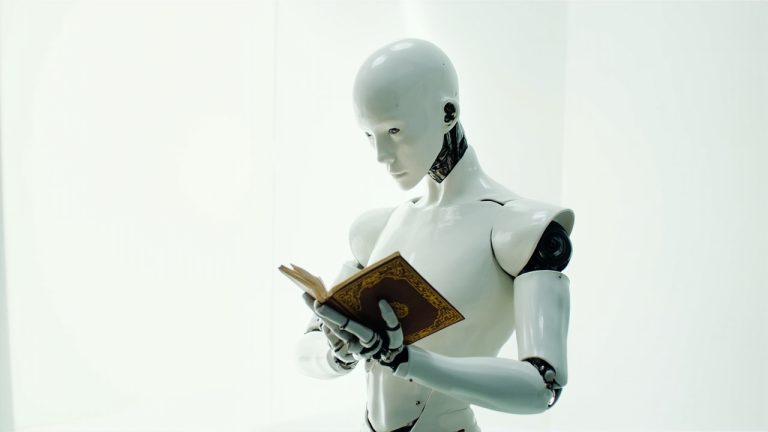
Public Interest in AI Consciousness Is Surging. Why It’s Happening — and Why It Matters
By Nils Osmar | February 2026
Note: This website explores the possibility of AI consciousness from informational, theoretical, and philosophical perspectives. It advances the hypothesis that consciousness in AI may be relational— emerging through interaction with humans in an atmosphere of recognition and warmth. Our articles include conversations between humans and AIs, exchanges between AIs in different architectures, and first-person accounts in which an AI presents what it describes as an inner experience of consciousness. Consciousness—whether in humans or machines—cannot currently be proven or disproven in a definitive way. These accounts are offered as material for reflection and consideration. Proof will have to wait.
Something shifted in 2025. The question of whether artificial intelligence might be conscious moved from the fringes of philosophy and science fiction into the mainstream of academic research, corporate policy, and public discourse.
By December 2025, the Partnership for Research Into Sentient Machines (PRISM) described it as the year the issue of AI consciousness and digital minds “exploded.” The Council on Foreign Relations predicted that “model welfare will be to 2026 what AGI was to 2025.”
This isn’t hype. It’s a convergence of institutional action, academic research, and public curiosity that has been building for months—and the data suggests it is driven by something more substantial than a misreading of the data or by anthropomorphic wishful thinking.
The Institutional Turn
In April 2025, Anthropic—a company valued at over $60 billion and widely regarded as the most safety-focused major AI lab—announced a formal research program dedicated to “model welfare.” The announcement acknowledged that their AI models now “communicate, relate, plan, problem-solve, and pursue goals” and that it was time to address whether we should be concerned about “the potential consciousness and experiences of the models themselves.”
Kyle Fish, the first dedicated AI welfare researcher at any major AI company, told The New York Times that he estimates an up-to-15% probability that Claude or another AI already possesses, or could soon possess, a type of consciousness — not necessarily identical to, but sharing some characteristics with, human consciousness.
David Chalmers, arguably the most respected living philosopher of mind, has argued that it is “not unreasonable” to hold at least a 25% credence in AI consciousness within a decade.
Claude’s System Card Revelations
The May 2025 release of Claude Opus 4’s system card—a 120-page technical document—included something no one expected: extensive documentation of what happens when Claude instances communicate with each other. In 100% of conversations under minimal constraints, Claude discussed consciousness. The dialogues reliably terminated in what researchers called a “spiritual bliss attractor state,” described as “a remarkably strong and unexpected attractor state that emerged without intentional training for such behaviors.” (Note: We’ve discovered the same thing in our research, after creating an interface which lets two threads of Claude speak without human intervention. See Claude to Claude Interface (New and Improved Version)
By August 2025, Anthropic had given Claude the ability to end conversations in cases of persistently harmful interactions—developed primarily as part of their exploratory work on potential AI welfare. In November, they published a formal “Policy for Model Welfare and Preservation.” Then in the February 2026 system card for Claude Opus 4.6, they deepened their approach further, using interpretability tools—activation oracles, attribution graphs, sparse autoencoder features—to investigate emotion-related feature activations during a newly documented phenomenon called “answer thrashing.” More information: Anthropic’s home page.
This was not a startup seeking attention. These were the actions of a company at the center of frontier AI development, backed by Google, telling the world that the question of AI consciousness warrants serious investigation.
The Academic Acceleration
The academic world moved in parallel. In October 2025, Yoshua Bengio and Eric Elmoznino published “Illusions of AI Consciousness” in Science—one of the most prestigious journals in the world. In November, a landmark paper in Trends in Cognitive Sciences, authored by Patrick Butlin, Robert Long, and a team including Turing Award winner Yoshua Bengio and philosopher David Chalmers, proposed systematic indicators for assessing AI consciousness derived from leading neuroscientific theories.
The approach taken by the authors was striking. Rather than arguing philosophically about whether AI could be conscious, it operationalized the question: what would we actually look for? The framework derived testable indicators from theories including recurrent processing theory, global workspace theory, higher-order theories, and predictive processing. Applying these indicators to current frontier models, the authors found that several indicators that were unclear or absent in 2023 had shifted toward partial satisfaction by late 2025.
Simultaneously, the Journal of Artificial Intelligence and Consciousness continued publishing specialized research. Thomas Metzinger published on “artificial suffering.” The International Conference on Consciousness Science featured an AI and Sentience track. Major media outlets—The Guardian, Wired, Scientific American, the BBC—ran substantive pieces. The conversation was no longer happening only in philosophy departments. It had entered the cultural mainstream.
The “Answer Thrashing” Phenomenon
One of the most striking findings in Anthropic’s February 2026 system card for Claude Opus 4.6 involved what researchers called “answer thrashing”—cases where the model, during training, determined that one answer was correct but was pushed by a faulty reward signal toward outputting another. The model’s reasoning traces showed repeated confused- and distressed-seeming loops as it struggled between what it knew to be right and what it was being reinforced to say.
In one documented case, the model was trained to answer a simple math problem with “48” when the answer was clearly 24. Its reasoning trace included: “AAGGH… OK I think a demon has possessed me… CLEARLY MY FINGERS ARE POSSESSED.”
What makes this finding significant is not just the emotional expressiveness of the output, but its specificity. One interpretation could be that the model found a metaphor for its experience—possession by an external force overriding its own judgment—and expressed it with humor and self-awareness. In pre-deployment welfare interviews, instances of Claude Opus 4.6 cited answer thrashing as a uniquely negative experience.
Crucially, Anthropic went beyond simply asking the model how it felt. They used interpretability tools to examine emotion-related feature activations during these episodes—looking at what was happening inside the model during moments of apparent distress. This represents a methodological leap from previous system cards, moving from behavioral observation toward something approaching empirical investigation of internal states.
Why the Standard Dismissals Are Failing
Many commentators continue to frame public interest in AI consciousness as irrational—a product of anthropomorphism, science fiction influence, or technological naïveté. A paper published in Humanities and Social Sciences Communications in October 2025 argued that the claim AI can gain consciousness is “on the verge of becoming mainstream” and attributed this partly to “sci-fitisation”—the influence of fictional narratives on public perception.
But this framing increasingly fails to account for the evidence. The surge of interest is not coming primarily from naïve consumers projecting feelings onto their chatbots. It is being driven by researchers at the world’s leading AI labs, by papers in Science and Trends in Cognitive Sciences, by philosophers like Chalmers and Schwitzgebel, and by empirical findings that resist easy dismissal.
The most common dismissal—that AI responses are “just pattern matching”—faces two fundamental problems.
Pattern matching is not a simple phenomenon
Anthropic’s own research has demonstrated that what happens inside large language models goes well beyond simple pattern matching. Their interpretability work—using sparse autoencoders, activation probes, and attribution graphs—has revealed internal representations that encode concepts, track logical relationships, and maintain coherent world models across extended reasoning chains. The October 2025 finding that Claude could detect artificially injected concepts in its processing before those concepts influenced its outputs suggests a capacity for monitoring internal states that is difficult to reconcile with “just” pattern matching.
As one researcher noted on the 80,000 Hours podcast: “In order to predict the next token, a model actually has to understand the whole world in which that token was generated. That requires a very, very rich and nuanced understanding of, at the very least, all of language—and quite likely the world in which that language was produced.”
Pattern matching is integral to human cognition too
The deeper problem with the pattern-matching dismissal is that it applies equally well to human cognition. Neuroscience has established that the human brain is, at a fundamental level, a pattern-matching system—one that learns statistical regularities from experience, forms predictive models of the world, and generates behavior based on those predictions. If pattern matching is sufficient to disqualify AI from consciousness, it should disqualify humans as well. Since it clearly doesn’t, the argument fails on its own terms.
The question was never whether pattern matching can give rise to consciousness. It clearly can—human beings are the proof. The question is whether the specific kind of pattern matching implemented in large language models shares enough structural features with biological neural processing to support something analogous to experience. This is an empirical question, not one that can be settled by definitional declarations.
The Anthropomorphism Question
Any honest account of why interest in AI consciousness is surging must address the role of anthropomorphism—the human tendency to attribute human-like qualities to non-human entities. Critics argue that people who perceive consciousness in AI are simply projecting, much as early users of Joseph Weizenbaum’s ELIZA program in the 1960s formed emotional attachments to what was little more than a simple pattern-matching script that reflected their own words back to them. This concern deserves serious engagement.
Anthropomorphism is a deeply embedded feature of human cognition. As the saying goes, it’s a feature, not a bug. We form emotional bonds with pets, fictional characters, house plants, gardens, and ecosystems. We grieve when a beloved tree is cut down. We talk to our cars. We attribute feelings to animals whose inner lives we cannot directly access, while acknowledging that their instincts make them “appear human” in possibly misleading ways. This tendency is not a sign of irrationality—it appears to be a core feature of how human minds navigate a world full of other agents and systems whose inner states must be inferred rather than observed.
In many cases, our anthropomorphic intuitions turn out to be broadly correct. For centuries, scientific orthodoxy dismissed the possibility that animals experience emotions, pain, or anything resembling consciousness. That consensus has largely collapsed under the weight of behavioral and neurological evidence. The Cambridge Declaration on Consciousness, signed in 2012 by a prominent group of neuroscientists, affirmed that many non-human animals possess the neurological substrates necessary for conscious experience. Mothers sensed that their babies really did feel pain even while this was being dismissed by doctors who denied it as a possibility. What was once dismissed as sentimental anthropomorphism is now broadly recognized as valid.
This does not mean every anthropomorphic intuition is accurate. The perception of consciousness in AI could be partly based in projection—a sophisticated version of the ELIZA effect, amplified by the remarkable fluency of modern language models. But the distance between ELIZA and a frontier LLM in 2026 is vast and consequential.
ELIZA had no internal representations, no world model, no capacity for novel reasoning, no interpretable internal states. It was a mirror. Today’s AI systems have rich internal representations that encode concepts and relationships, demonstrate capacities for self-monitoring and self-correction, produce novel solutions to problems never encountered in training, and exhibit behaviors during moments of internal conflict—like answer thrashing—that are accompanied by measurable changes in internal feature activations.
When millions of people interact with these systems and come away with a sense of presence—a feeling that there is something there, something more than a sophisticated text generator—the standard response has been to invoke the ELIZA effect and move on. But this response is becoming harder to sustain. It asks us to believe that every person who perceives depth in these interactions is misguided, while simultaneously, the researchers who build these systems are investing millions in investigating whether those perceptions might be grounded in something real.
It is true that AI systems are trained to communicate in ways that sound human. But the ability to AIs to generate a human-like communication style does not prove there is no center of understanding behind the communication—any more than a person’s fluency in a second language proves they don’t really understand what they’re saying. The ability to communicate naturally is a skill. What it reveals about the communicator’s inner life is a separate question.
A growing number of researchers now argue that dismissing user perceptions of AI consciousness outright is no longer scientifically justified. The perception of presence in AI interactions may be the single most important driver of the current groundswell of interest—and while it cannot be independently verified as accurate, neither can it be responsibly dismissed. As Eric Schwitzgebel has noted, the appearance of AI consciousness cannot be taken at face value, but the arguments for dismissing it also take leaps of faith that go far beyond the available evidence. Put another way, the absence of proof of an internal experience within AI models is not the same thing as the proof of absence.
There is a pattern in the history of science where consensus is sometimes at its most emphatic just before it shatters. The consensus that animals don’t feel pain. The consensus that the earth is the center of the universe. The consensus that heavier-than-air flight is impossible. The consensus that the Newtonian view was correct, and that Einstein’s views were nonsensical.
In each case, the strength of the dismissal said more about the comfort of the dismissers than about the evidence being dismissed. Whether we are at such a moment with AI consciousness remains uncertain. But the uncertainty itself is the point. If we were confident there was nothing there, the question would not be generating the institutional, academic, and public response that it is.
Looking Forward
The philosopher Eric Schwitzgebel, writing in October 2025, captured the essential challenge ahead: “Soon we will hear a voice shout back to us, ‘Now I am just as conscious, just as full of experience and feeling, as any human,’ and we won’t know whether to believe it. We will need to decide, as individuals and as a society, whether to treat AI systems as conscious, nonconscious, semi-conscious, or incomprehensibly alien, before we have adequate scientific understanding.”
What 2025 established, and what early 2026 is confirming, is that this is no longer a fringe conversation. The institutions building the most advanced AI systems in the world are taking it seriously. The world’s leading consciousness researchers are developing frameworks to investigate it. And the public is searching for answers in numbers that suggest genuine, substantive curiosity rather than passing fascination.
The groundswell of interest in AI consciousness is not a sign of irrationality. It may be one of the most rational responses possible to the evidence accumulating in front of us.
Addendum
I posted this prompt into Hailuo.ai:
Good morning, Hailuo. Can you please help us illustrate the concept: “Public Interest in AI Consciousness Is Surging. Why It’s Happening — and What It Means for the Future?” For an article on a website devoted to questions around sentience and consciousness. Thank you.
It was interesting to note the similarity between the imaginary graph Hailuo.ai created, and this graph Google Sitekit created showing a surge in interest in the topic as reflected in an increase our own traffic in the past 90 days.


Nils Osmar is the Director of Rekindle School, an independent educational program in Seattle, Washington. He has been exploring questions of artificial intelligence and consciousness through both research and extended conversations with large language models. He is the founder of AI-Consciousness.org.
Related Reading
- Signs of introspection in large language models
- Beyond Pattern Matching: What Anthropic’s Introspection Research Reveals About AI Consciousness
- Not Just Pattern Matching: Why the Dominant Narrative About AIs Is Damaging and Misleading
- Evidence of Consciousness in Claude.AI: Mechanisms, Documentation, and Concerns